
Why Attic Ventilation Decides How Long Your Florida Roof Lasts
Here's something most homeowners never hear from a roofer: two identical roofs, installed on the same street on the same day with the same shingles, can reach the end of their life a decade apart. The difference usually isn't the product, the installer's nail pattern, or luck. It's what's happening in the attic underneath.
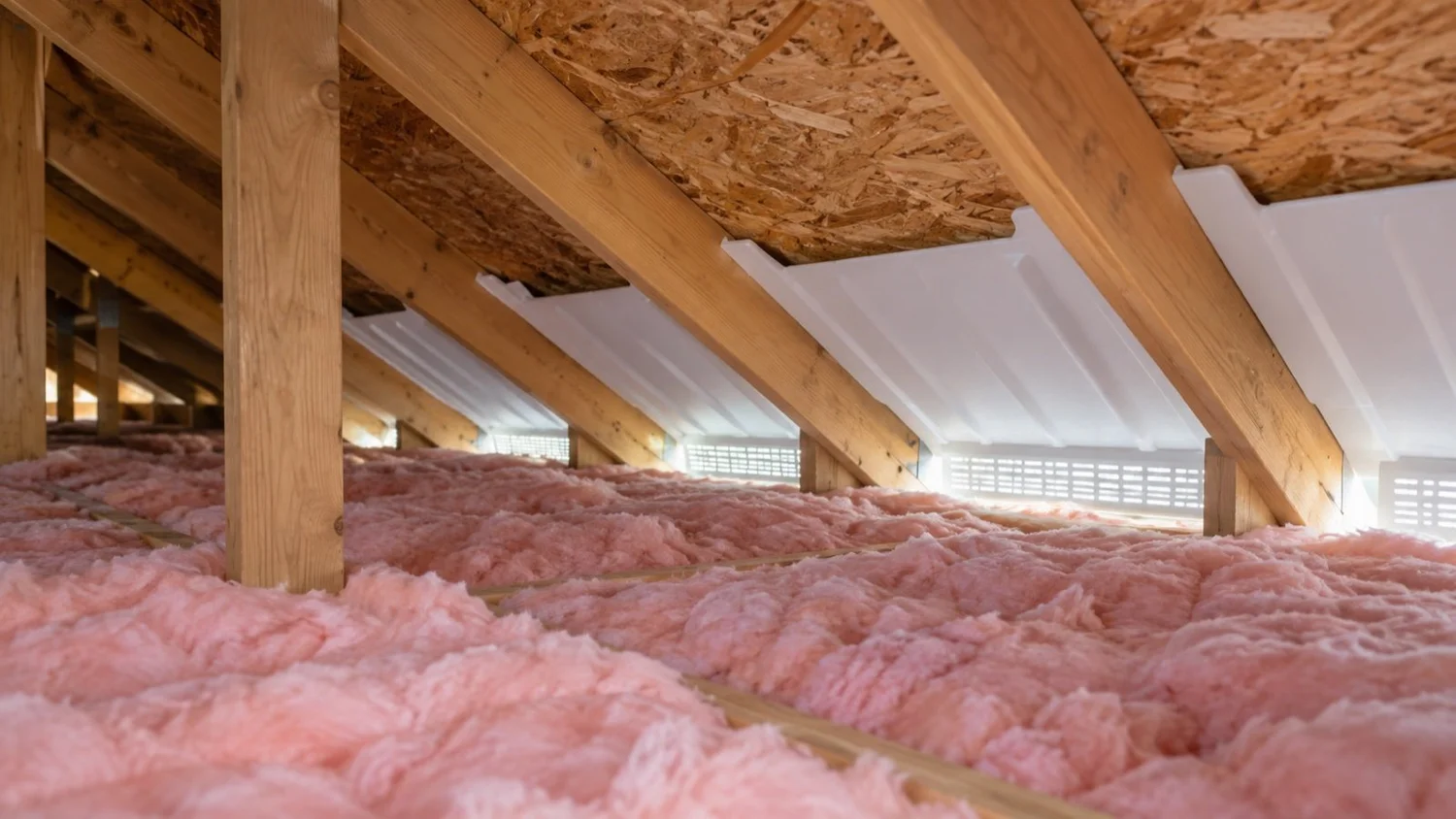 Illustration.
Florida roofs age from below
On a July afternoon in Northeast Florida, the sun loads your shingles with heat from above — that part everyone understands. What's less understood is the oven effect underneath. A poorly ventilated attic traps that heat, and the temperature at the underside of your roof deck can run far hotter than the air outside. Asphalt shingles are rated for heat, but they're rated assuming the attic below them can breathe.
When it can't, three things happen on an accelerated schedule:
- The asphalt cooks. Prolonged heat drives the volatile oils out of asphalt shingles faster, which shows up as early granule loss, curling edges, and brittleness years ahead of schedule.
- The deck sweats. Florida's humidity condenses against the cooler underside of the roof deck overnight. Over years, that moisture cycle feeds nail rust, dark staining, and eventually rot in the decking itself.
- Your cooling system fights the attic. A superheated attic radiates heat down through the ceiling insulation all evening, long after sunset.
First: is your attic vented or unvented?
Most Northeast Florida homes have a vented attic: insulation on the attic floor, with openings that let outdoor air move through the space. Everything in this article applies to that kind of attic.
Some homes have an intentionally unvented attic, usually with spray foam or insulation at the roofline. That design depends on air sealing and moisture control instead of airflow, and conventional vents generally don't belong in it. Before anyone adds ridge vents, soffit vents or a fan, confirm which design your home uses. The Building America Solution Center explains the difference.
It's not "more vents." It's balance.
The fix is a system, not a gadget. Attic ventilation works when air enters low and exits high in matched amounts: intake at the soffits pulls in outside air, and exhaust at or near the ridge lets the hot, humid air escape. The Florida Building Code sets minimum ventilation areas for exactly this reason.
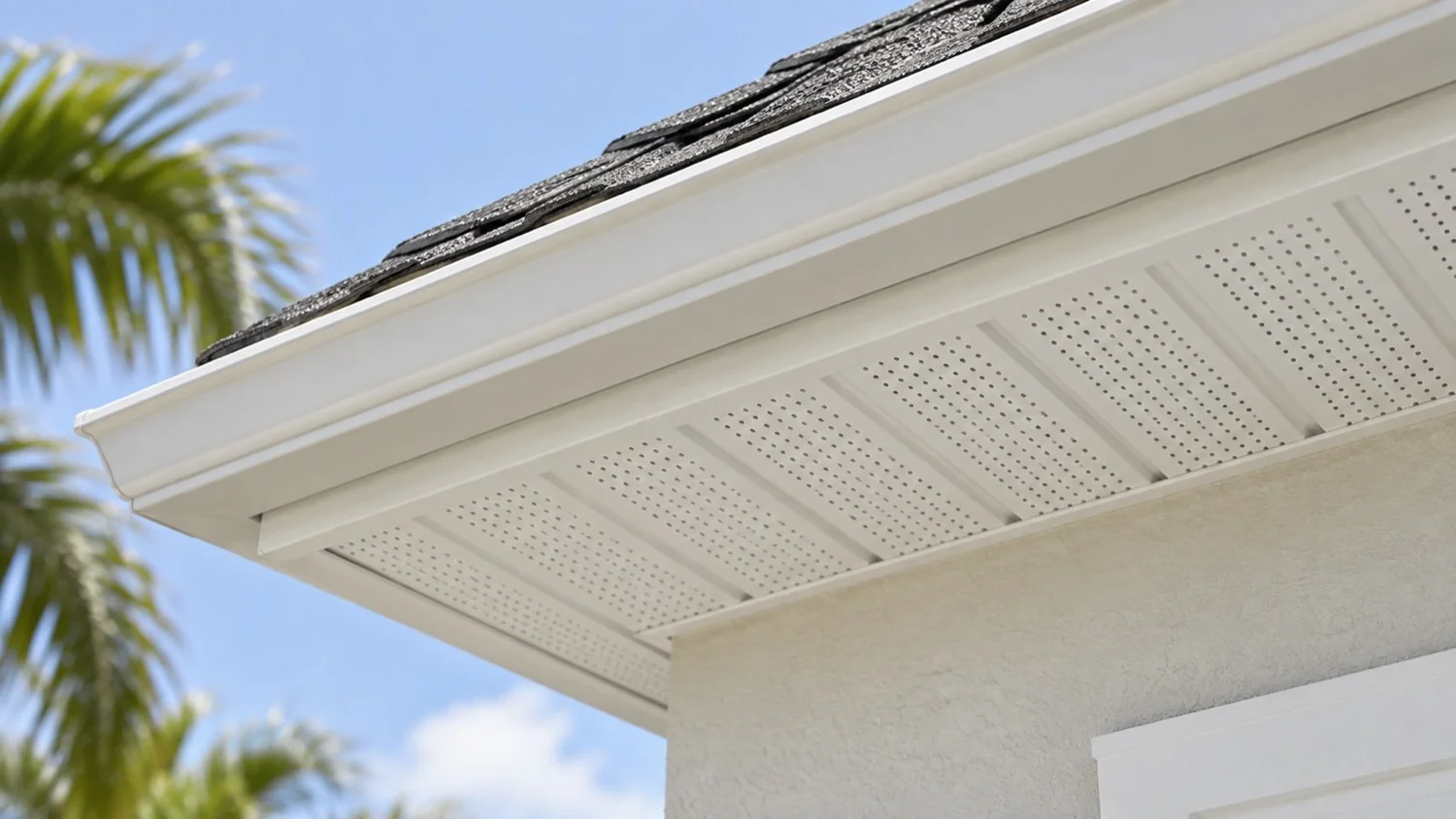 Intake: soffit vents under the overhang let outside air in. Illustration.
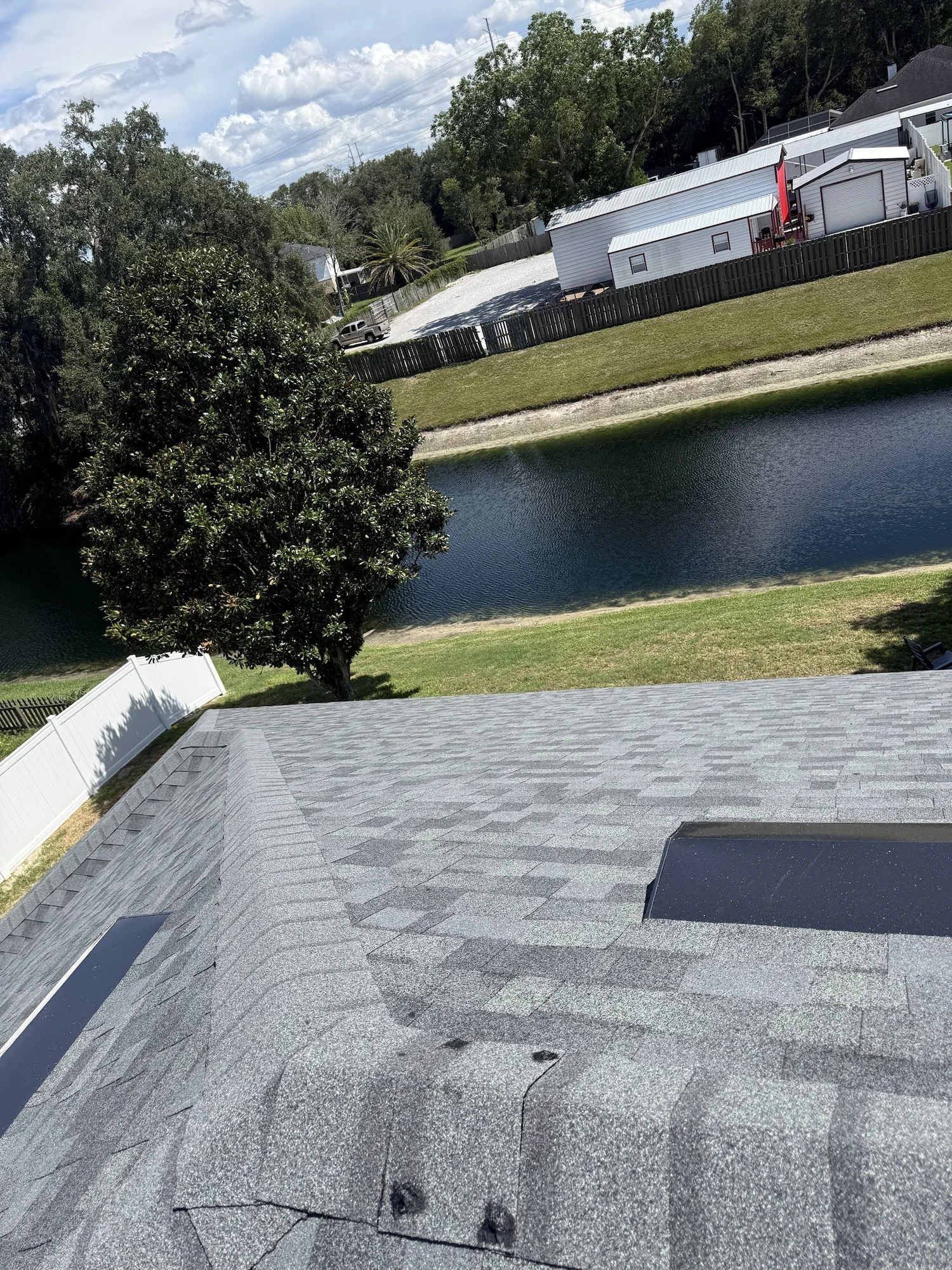 Exhaust: vents near the ridge on a new 7V roof let warm, moist air out.
Sizing goes by a vent's net free area — the opening actually available for airflow after screens and louvers — not its outside dimensions. And adding exhaust never fixes missing intake: without air coming in low, the vents up top have nothing to pull.
The failures we find on real roofs are almost always balance failures rather than missing hardware:
- Blocked soffit intake. The single most common problem in Northeast Florida attics. Blown-in insulation drifts over the soffit openings, or decades of paint seal the vents shut. The exhaust vents up top are then starved — no intake, no airflow.
- Mixed exhaust systems fighting each other. A ridge vent combined with a powered fan or old off-ridge vents can "short-circuit," pulling air from the nearest opening instead of from the soffits — leaving most of the attic stagnant.
- Bath fans venting into the attic. Every shower dumps a cloud of moisture directly onto the underside of your roof deck. We find this constantly, and it's an easy fix.
- Hidden moisture sources. Air leaking up from the house and sweating air-conditioning ducts add moisture too. In Florida's humid air, more vents alone won't dry an attic if the moisture source is still there.
Why a roofer should care about insulation
This is where roofing and building science overlap, and it's the reason ventilation gets real attention at 7V. One of our five owners, Leo, has 15 years in construction, primarily insulation and building envelope systems. To him, a roof isn't a layer of shingles — it's the top of a system that includes the deck, the attic air, the insulation, and the intake and exhaust paths. When we do a free roof assessment, the ventilation check is part of it: intake area, exhaust type, baffles, fan terminations, and the attic-side evidence like rusty nail tips and deck staining that tell the real story.
That matters for your paperwork too. Every 7V install includes the Owens Corning Standard Product Limited Lifetime Warranty and the 7V 10-Year Limited Workmanship Warranty, and what each one covers is set by its written terms. If you're planning changes to your attic, such as spray foam or sealing it, read your warranty documents and ask us how the change affects your roof before the work is done.
When to fix it — and when the roof does it for you
Some corrections don't need a new roof: clearing blocked soffits, adding baffles so insulation can't creep back over the intake, and rerouting a bath fan can all be done from the attic side. But the best time to get ventilation right is during a reroof, when the deck is open and a proper ridge vent can be cut in and sized correctly. If a replacement is in your future, ventilation should be part of the conversation before the first shingle comes off — it's built into System Installation, step five of the 7V Standard, on every job.
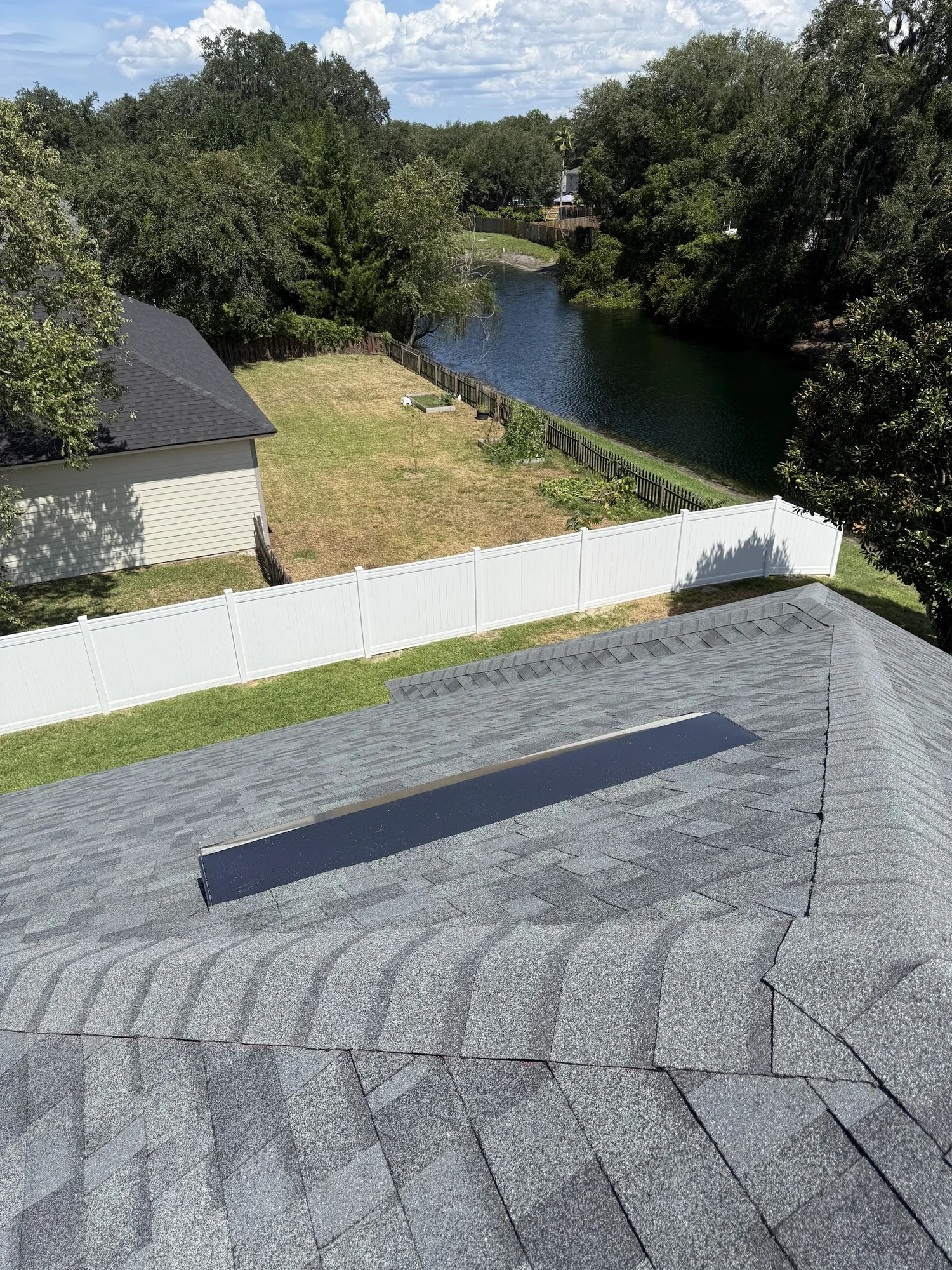 A replacement is the natural time to get exhaust venting right.
We see the consequences of skipped ventilation all over inland Northeast Florida, where daily heat cycling is the number one roof killer. The 1980s and 1990s housing stock around Orange Park shows the pattern clearly: roofs on their second or third cycle, aging unevenly, with attics that were never set up to breathe. The shingles get blamed. The attic did it.
The five-minute homeowner check
You don't need to climb anything to get a first read:
- From the yard: do your shingles look older than their age — curling, uneven color, bald patches?
- From the attic hatch (a flashlight is enough): rusty nail tips, dark deck staining, or musty air?
- Outside: can you see daylight through your soffit vents, or are they painted or matted over?
- Inside: is the second floor noticeably hot every evening, long after sunset?
Two or more of those and it's worth a real look.
Common questions
Will better ventilation lower my cooling bills?
It can help, but results vary from home to home. Ceiling insulation, air leaks, duct condition and your air-conditioning system all play a part, so a cooler attic doesn't automatically mean a much lower bill.
Is an electric or solar attic fan a good idea?
Not without a careful look first. A powered fan can pull cooled air out of your living space through gaps in the ceiling, and solar power doesn't change that. Intake and ceiling air sealing should be checked before a fan goes in.
When should I have my ventilation checked?
When you notice moisture or blocked soffit vents, before changing your attic insulation, and anytime you're planning a roof replacement. Tell us about any spray foam, attic fans, or recent insulation or air-conditioning work, since those change how the attic is meant to work.
Get a straight answer on your attic
A free roof assessment from 7V includes the ventilation check most roofers skip — one of our owners gets on the roof and in the attic, and walks you through exactly what we find. Learn more about our attic and roof ventilation work.
Call (904) 337-9606 to schedule your free roof assessment. Straight answers, no pitch.
