
Green Cove Springs Roofing.
County Seat. River Town. Full Standard.
Green Cove Springs is the county seat of Clay County — a river town on the St. Johns with some of the oldest housing stock in the county. Clay County permits, waterfront humidity considerations, and a mix of historic and mid-century homes define the roofing market here. Same seven-step process, same permit, same warranty as every job we take.
FL License CCC1337027 · Clay County Building Department · Based in Atlantic Beach
Green Cove Springs, FL
Clay County · FL License CCC1337027
Clay County's Oldest City — Served With the Same Standard
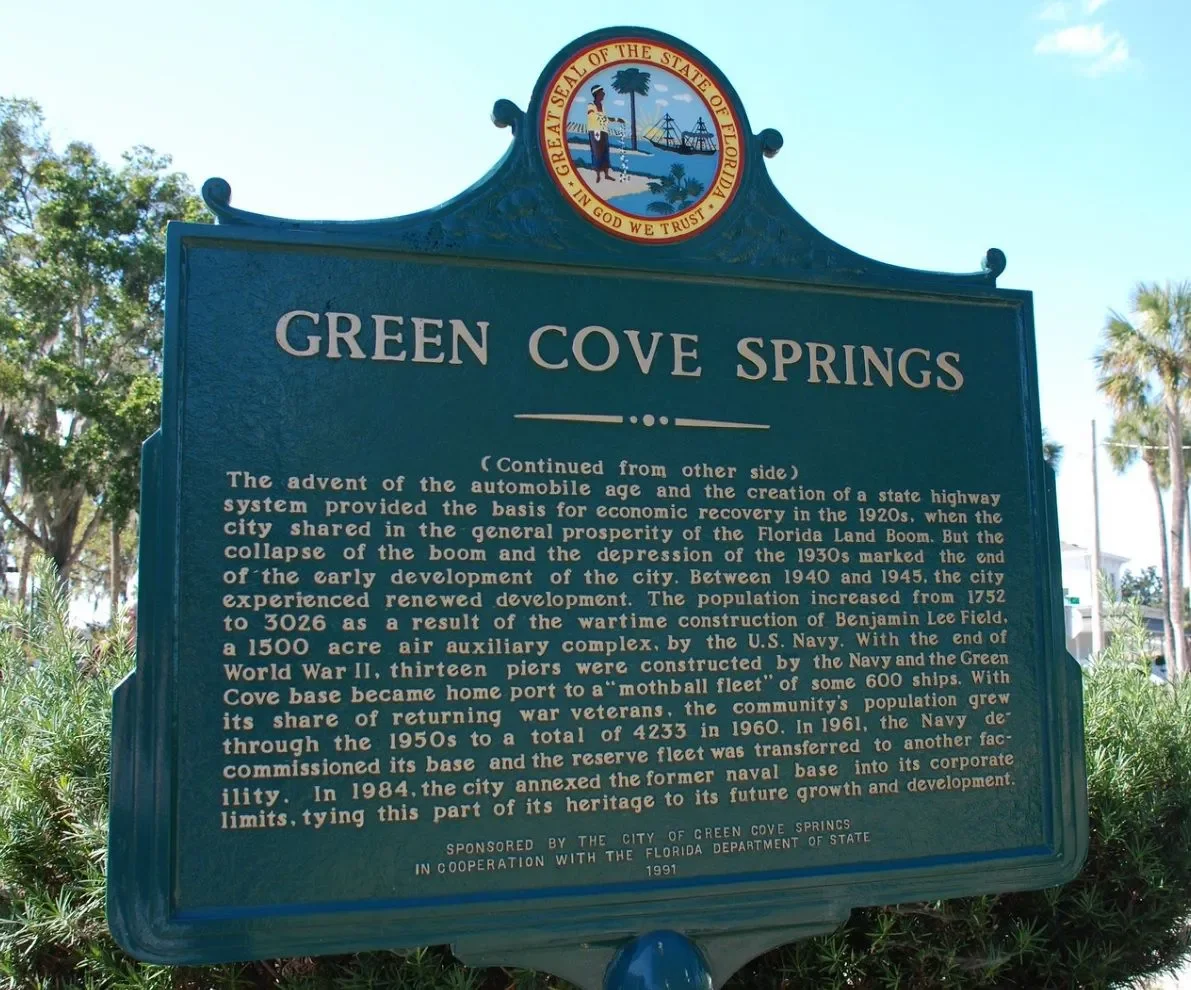
Green Cove Springs has been Clay County's seat of government since 1858. Sitting on the west bank of the St. Johns River about 25 miles south of Jacksonville, it's one of the oldest continuously inhabited towns in the county — and that history shows in its housing stock. The city has Victorian-era structures near the waterfront, early 20th century residential neighborhoods, mid-century homes, and some newer development on its outskirts.
The St. Johns River location gives Green Cove Springs a character different from the rest of Clay County. Riverside properties face elevated humidity and moisture exposure that doesn't affect inland Orange Park or Fleming Island. It's not salt air — but the river creates its own moisture cycling that accelerates wear on wood components, flashing, and deck material on waterfront and near-waterfront homes.
Permits go through Clay County Building Department, same as every other Clay County community we serve. We pull the right permit before every job begins, check every deck board after tear-off, and back every installation with our 10-Year Limited Workmanship Warranty. Green Cove Springs gets the same documented standard as the rest of our territory.
Schedule Free AssessmentGreen Cove Springs Roofing Facts
Why Waterfront Matters — Even Without Salt Air
Green Cove Springs isn't coastal — but the St. Johns River creates roofing conditions distinctly different from the inland Clay County communities of Orange Park or Middleburg. River proximity means sustained elevated humidity, periodic flooding risk in lower areas, and a moisture environment that works on roof components differently than a drier inland setting.
We assess riverfront and near-riverfront Green Cove Springs properties with this in mind. It doesn't change the standard — it changes what we look at most closely during the assessment.
Elevated Humidity Cycling
The St. Johns River sustains higher ambient humidity in Green Cove Springs than in landlocked areas of Clay County. Over time this accelerates moisture absorption in wood decking, especially on older homes with original board decking, and promotes moss and algae growth on shingles — which traps additional moisture against the surface.
Flashing Wear Near Water
While not salt corrosion, the wet environment near the river accelerates oxidation on older galvanized flashing and exposed fasteners. We assess all metal components on riverfront and near-riverfront properties with heightened attention to moisture-related wear rather than assuming standard inland conditions.
Older Deck Conditions
Victorian-era and early 20th century homes near the waterfront in Green Cove Springs often have original board decking with decades of humidity exposure. Deck condition on these properties varies more than on newer construction — we document every board after tear-off and address rot before installation, not after.
Ventilation on Older Homes
Older Green Cove Springs homes were typically built with minimal attic ventilation by modern standards. Combined with the humid riverside environment, poor ventilation creates conditions that accelerate shingle aging and promote moisture retention in the attic space. We assess and address ventilation as part of every replacement scope.
Green Cove Springs — From the Waterfront to the Outskirts
Green Cove Springs spans a wider range of housing ages than most Clay County communities. Here's what each era looks like from a roofing perspective.
Victorian-Era Waterfront Homes
Late 1800s to early 1900s. Complex rooflines, original or early-replacement decking, high humidity exposure. Most detailed assessment process.
Early 20th Century Residential
1910s–1940s construction. Board decking common. Ventilation typically minimal by modern standards.
Mid-Century Homes
1950s–1970s. These are the most common replacement candidates in Green Cove Springs today.
1980s–1990s Residential
Established neighborhoods at or approaching end of original roof lifespan. Assessment and decide phase.
Newer Outskirt Development
2000s–2010s construction further from the river. Cleaner conditions, lower humidity exposure.
Rural & Semi-Rural Properties
Surrounding area includes acreage and rural lots. Same Clay County permit process. Rural properties not treated as secondary.
Clay County Building Department — The Same as the Rest of Clay County.
Green Cove Springs is the Clay County seat, but roofing permits still go through Clay County Building Department — same as Orange Park, Fleming Island, Middleburg, and Keystone Heights. City of Green Cove Springs properties within city limits may use the city's own building department. We identify the correct pathway for your specific address before work begins.
Permit Authority
Clay County
Building Department
City of Green Cove Springs properties may use the city building department. We confirm the correct authority for your address on every job.
Every Service. The Same Standard.
Roof Replacement
Full tear-off, thorough deck evaluation with extra attention to moisture conditions on older riverside homes, complete system installation. Clay County permit before work begins. 10-Year Limited Workmanship Warranty at completion.
Roof Repair
Failed flashing, moisture-related deterioration, damaged shingles. On older Green Cove Springs homes we assess the overall roof condition alongside the repair request — sometimes the findings point clearly toward replacement rather than repair. Honest answer either way.
Free Roof Assessment
We get on your roof and document what we find — including moisture-related wear on waterfront properties. Straight answers. Always free. No pitch, no pressure.
Storm Damage Assessment
Inland storm events — severe thunderstorms and occasional wind damage — can significantly impact older roofing in Green Cove Springs. We document what the storm did and give you a written assessment. Clay County permit required for replacement work.
Roof Ventilation
In Green Cove Springs' riverside environment, proper attic ventilation matters even more than in drier inland areas — it's the primary tool for managing moisture accumulation in the attic space. We assess and address ventilation on every replacement.
Real Reviews. Real Jobs.
"Very quick to respond to your roofing issue. Honest about what they believe will meet your issue. Clean when finished. Fair on pricing. Just a quality group."
Kendall Higginbotham
Google Review · Local Guide
"Excellent timely service for a great price. Would highly recommend!"
DJ Pratt
Google Review
"I had an excellent experience with 7V Roofing from start to finish. Professional, punctual, and very knowledgeable throughout the process."
Alina Vergara
Google Review
Straight Answers
Yes. Green Cove Springs is in Clay County, so permits go through Clay County Building Department. Properties within the City of Green Cove Springs city limits may also use the city's own building department. We confirm the correct permit authority for your specific address and pull the right permit before work begins — always included in your quote.
Yes, meaningfully. The river environment creates elevated humidity and moisture cycling — not coastal salt air, but a sustained wet environment that accelerates wear on wood components, older flashing, and deck material over time. Waterfront and near-waterfront homes in Green Cove Springs show these effects more clearly than homes further from the river. We assess riverside properties with moisture exposure as the baseline assumption rather than treating it as inland standard conditions.
Homes from that era in Green Cove Springs almost certainly have original or very early-replacement board decking — 1×6 or 1×8 lumber planks rather than plywood sheathing. Combined with decades of riverside humidity, deck condition on these homes varies significantly. We check every board during tear-off, document with photos, and address any rot or deterioration before installation. No change-order surprises — we discuss deck risk honestly during the estimate conversation.
Same permit authority as Orange Park, Fleming Island, Middleburg, and Keystone Heights — all Clay County. What makes Green Cove Springs different is the combination of older housing stock (some of the oldest in the county) and the St. Johns River moisture environment. These two factors together create more variable assessment findings than in newer, drier Clay County communities. The process doesn't change; what we find often does.
We get on your roof and document shingle condition, all flashing and metal components, ventilation, gutters, and deck access points. On older Green Cove Springs homes near the waterfront we give extra attention to moisture-related wear and deck condition. No pitch, no pressure. Always free.
Green Cove Springs Homeowner?
River Town Roofing Done Right.
Start with a free assessment. We'll document what's on your roof — including any moisture-related findings — and give you a straight account of what it needs.